Distillation Columns: The Backbone of Efficient Separation Processes
July 24, 2026
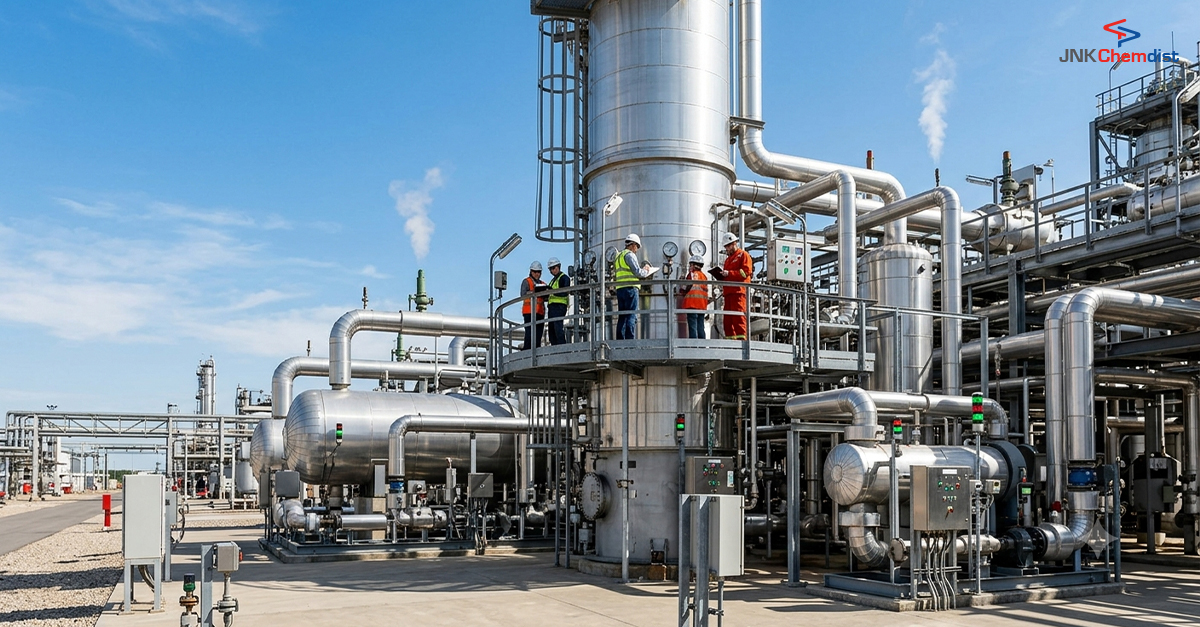
In the process industries, few technologies have remained as fundamental and indispensable as the distillation column. Despite advancements in process intensification, membrane systems, and alternative separation technologies, distillation continues to be the preferred solution for a wide range of chemical, petrochemical, pharmaceutical, and specialty chemical applications.
Its importance lies not only in its ability to separate components but also in its direct impact on product quality, throughput, energy consumption, and overall plant economics.
For many facilities, distillation represents one of the most energy-intensive operations within the process chain. As production demands increase and sustainability targets become more stringent, the focus has shifted from simply operating distillation columns to optimizing their performance.
A well-engineered distillation system is the result of multiple design considerations working together. Feed characteristics, operating pressure, vapor-liquid equilibrium, tray or packing selection, hydraulic design, and heat integration strategies all influence separation efficiency. Even minor improvements in these areas can significantly affect operating costs over the lifecycle of the plant.
Another critical consideration is scalability. As industries expand production capacity, distillation systems must be designed to accommodate future requirements without compromising performance. This requires a careful balance between capital investment, operational flexibility, and long-term process reliability.
Modern distillation projects are therefore no longer viewed as standalone equipment purchases. They are evaluated as integrated process solutions where engineering decisions influence everything from energy utilization and maintenance requirements to product recovery and plant uptime.
In addition, many organizations are revisiting existing distillation assets to unlock hidden value. Through debottlenecking studies, internal modifications, process optimization, and improved heat recovery strategies, plants can often achieve meaningful capacity and efficiency improvements without major infrastructure expansion.
As process industries continue to pursue greater operational efficiency, distillation technology remains a key enabler of productivity and profitability. The challenge is no longer understanding the importance of distillation—it is ensuring that systems are engineered to deliver maximum performance throughout their operational life.
At JNK Chemdist, we approach distillation as a complete process engineering challenge rather than simply an equipment requirement. By combining process expertise, design capabilities, manufacturing excellence, and execution support, we help industries develop distillation solutions that align with both technical objectives and long-term business goals.